



Nullam dignissim, ante scelerisque the is euismod fermentum odio sem semper the is erat, a feugiat leo urna eget eros. Duis Aenean a imperdiet risus.

img
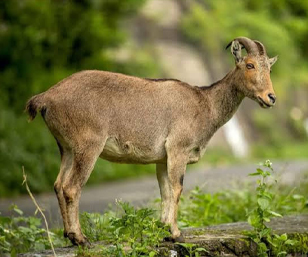
State Animal img  Nilgiritragus hylocrius

            The Nilgiri Tahr (Nilgiritragus hylocrius), locally known as Varai Aadu (வரையாடு), is an endangered mountain ungulate endemic to the Western Ghats and the official State Animal of Tamil Nadu. Renowned for its remarkable ability to climb steep rocky cliffs, it is often called the “Mountain Monarch.” This iconic species inhabits the high-altitude montane grasslands and shola ecosystems between 1,200 and 2,600 metres and is legally protected as an Endangered species under the IUCN Red List and listed under Schedule I of the Wildlife (Protection) Act, 1972, ensuring the highest level of protection.

            The Nilgiri Tahr has been deeply embedded in Tamil culture for over 2,000 years. It appears in several ancient Sangam literary works, including Silappathikaram, Sivagasindhamani, Natrinai, Aingurunooru, Paripadal, Pathitrupathu, and Pattinapalai, as well as in the 17th-century Courtallam Kuravanji, underscoring its long-standing cultural significance.

            A joint census conducted in 2023 by Kerala and Tamil Nadu recorded 2,668 Nilgiri Tahrs, with 1,303 individuals found within Tamil Nadu. The species survives in notable landscapes such as the Nilgiri Hills, the Anamalai–Palani ranges, Kalakad–Mundanthurai, and the Srivilliputtur–Meghamalai Tiger Reserve. As a flagship species of the montane grassland ecosystem, the Nilgiri Tahr serves as a crucial ecological indicator and forms an important prey base for predators like the tiger and leopard.

            In 2022, the Government of Tamil Nadu launched Project Nilgiri Tahr to restore habitats, strengthen population protection, support scientific research, and raise public awareness. The Hon’ble Chief Minister formally inaugurated this flagship initiative on 12 October 2023.

            Nilgiri Tahr Day – October 7: Celebrated annually to honour Dr. E.R.C. Davidar, who conducted the first scientific study on the species in 1975.
img

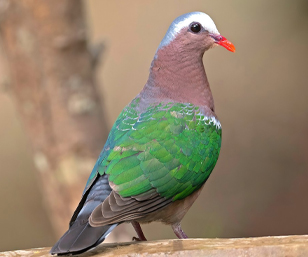
Emerald dove - மரகதப்புறா

The Emerald Dove (Chalcophaps indica), or Maragatha Pura, is the State Bird of Tamil Nadu. It is a small, ground-dwelling pigeon with shining emerald-green wings and a soft cooing call. Found in moist forests, mangroves, foothills, and plantations, it is common in the Western Ghats and reserve forests of Tamil Nadu. It usually forages alone or in pairs, feeding on fallen fruits and seeds. Listed as Least Concern (IUCN), it remains stable globally but faces local declines due to forest loss and disturbance.

State Bird img Chalcophaps indica
img
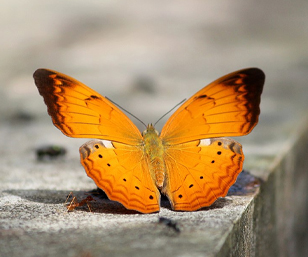
State Butterfly img Cirrochroa thais

Tamil yeoman - தமிழ் மறவன்

The Tamil Yeoman (Cirrochroa thais), or Tamil Maravan, is the State Butterfly of Tamil Nadu. A tawny-orange butterfly, it is found mainly in the Western Ghats, especially in moist evergreen forests, forest edges, and streamside habitats.Declared the State Butterfly in June 2019, it was chosen for its Tamil cultural identity and regional presence. It symbolizes Tamil Nadu’s butterfly heritage and promotes habitat protection and awareness of Western Ghats ecosystems.


img

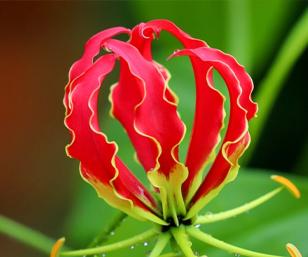
Gloriosa lily - செங்காந்தள் மலர்

The Gloriosa Lily (Gloriosa superba), called Kaanthal / Karthigai Poo, is the State Flower of Tamil Nadu. Known for its flame-like red and yellow petals, it grows in forests, rocky slopes and well-drained hill areas, flowering mainly in the monsoon. All parts of the plant are toxic, though it has cultural and medicinal importance. Habitat loss and wild collection affect its populations, making habitat protection and sustainable cultivation essential. true

State Flower img Gloriosa superba
img
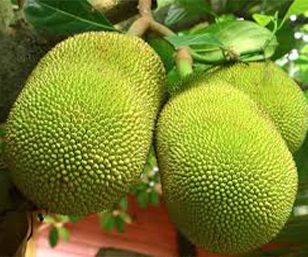
State Fruit img Artocarpus heterophyllus

Jackfruit - பலாப்பழம்

The Jackfruit (Artocarpus heterophyllus), or Palaapazham, is the State Fruit of Tamil Nadu and the world’s largest tree-borne fruit, reaching up to 55 kg. Highly productive, each tree can yield 200–500 fruits a year. It is culturally important in Tamil Nadu, used in both ripe and unripe dishes, and its wood is valued for instruments and furniture. Nutritious and widely grown in home gardens and farms, jackfruit supports biodiversity and suits climate-resilient farming. Conserving traditional varieties and promoting value-added use are key to sustainability.

img

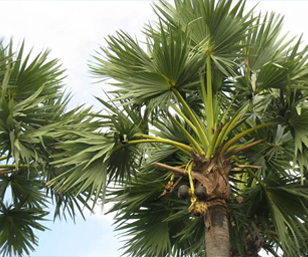
Palm tree - பனை மரம்

The Palmyra Palm (Borassus flabellifer), or Panai Maram, is the State Tree of Tamil Nadu and a defining symbol of the state's cultural and ecological identity.
Its tall trunk (up to 30 m) and fan-shaped leaves help it thrive even in arid, harsh environments. For centuries, it has supported rural life with its sweet fruit, nutritious sap, durable timber, and strong leaves used for thatching, weaving, and traditional manuscripts.
Widely celebrated in Tamil literature, folklore, and daily life, the Palmyra Palm remains one of the most economically and culturally important trees in Tamil Nadu.

State Tree img Borassus flabellifer